
Why Real Construction Experience Matters in Property Management
It is one thing to manage properties from behind a desk.
It is another thing to open a building up and see what is really going on inside the walls.
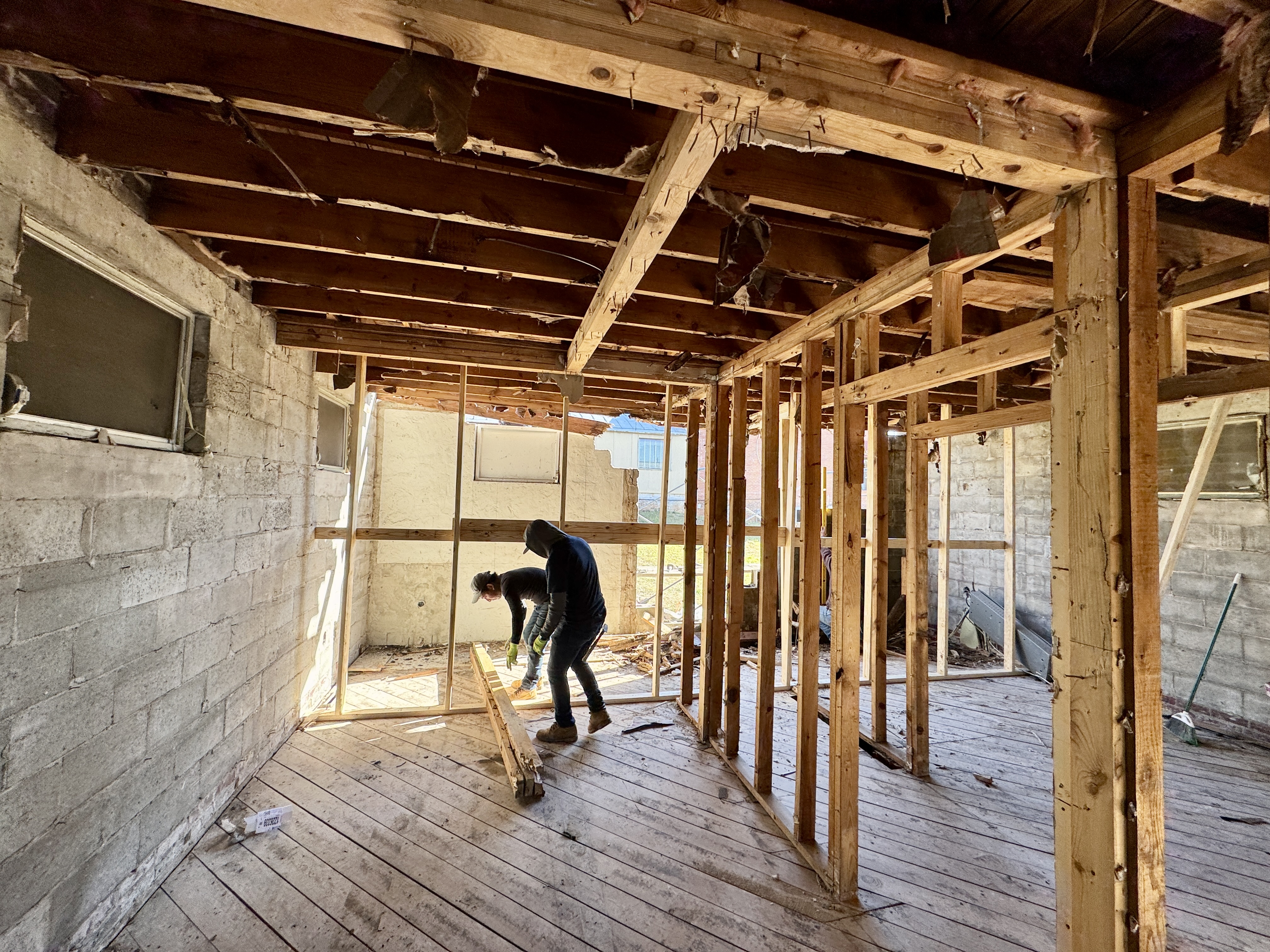
We are currently in the middle of a complete gut and remodel of our office building. And when we say gut, we mean gut. When the building was first opened up, it was moldy. The roof was failing. Every interior wall had to be removed. In the end, the only elements left standing were the four exterior walls.
From there, every major system has been rebuilt from the ground up or is actively being rebuilt. New plumbing. New electrical. New HVAC. A new floor system. A new roof. This has not been a cosmetic renovation. It has been a full structural rebuild.
Rough-in work is now nearing completion, with framing, mechanical, electrical, and plumbing all coming together. We are not finished yet, but we are far enough into the process to clearly see where projects go smoothly, where they tend to stall, and why.
What Renovation Teaches You Quickly
One of the biggest lessons from a project like this is how often reality goes deeper than the original scope.
For example, the initial plan was to shore up the rear exterior block wall and move forward. Once work began, it became clear that approach was not sufficient. Nearly the entire wall had to be replaced, which required temporarily supporting the roof while the work was done.
Moments like that are where experience matters. Not panic. Not guesswork. Just an understanding of how buildings behave once they are opened up and stressed.
Those lessons are not learned through spreadsheets, emails, or phone calls alone. They come from being in the middle of the work and seeing firsthand how small assumptions can turn into big consequences.
Hands-On Experience, Large and Small
Our role in this project has been active and hands-on. We are overseeing permits, coordinating vendors, managing payments, sequencing work, and making decisions as conditions change. It means owning the entire process, not just reacting to updates.
That same approach carries into smaller projects as well. We also buy and renovate our own investment properties. Whether it is a full system replacement, structural repairs, or targeted updates, the scale may change, but the principles do not.
Buildings do not become simpler just because they are smaller. The same systems, risks, and tradeoffs still apply.
Why This Matters for Property Owners
The biggest risk of working with a property manager who lacks construction experience is not bad intentions. It is blind spots.
When someone does not understand how buildings are put together, they often do not know what to look for during inspections or maintenance visits. And when they do notice something unusual, they may not fully understand what it means or how urgent it actually is.
That can lead to problems being missed until they become expensive, or decisions being made by blindly trusting the first recommendation presented.
Experience changes that perspective. When you have spent time inside walls, under floors, and on roofs, you learn to recognize patterns. You learn which issues are cosmetic and which ones signal deeper problems. That knowledge helps protect properties, control costs, and prevent surprises.
A Question Worth Asking
For property owners, this leads to a simple but important question:
Does your property manager understand how houses actually work, or do they only know who to call?
There is a meaningful difference between managing work and understanding the work itself. We believe good property management requires both.